


Guía Completa de Tesla V2L 2025 — Cómo Usar, Modelos Soportados, Impacto en la Batería y Escenarios Reales
Los vehículos eléctricos ya no son solo para conducir: se están convirtiendo en centros de energía inteligentes. En 2025, la función Vehicle-to-Load (V2L) de Tesla está redefiniendo cómo los conductores utilizan la electricidad almacenada. Desde respaldo en el hogar hasta camping al aire libre, V2L convierte un Tesla en una estación de energía móvil capaz de hacer funcionar dispositivos cotidianos de manera segura y eficiente.
Esta guía explica cómo funciona Tesla V2L, qué modelos de 2025 lo soportan, cuánto tiempo puede alimentar dispositivos, su impacto en la batería y cómo se compara con otros sistemas V2L de BYD, Ford y Hyundai.

Respuestas Rápidas — Lo Que Necesitas Saber Sobre Tesla V2L
¿Tesla soporta V2L en 2025?
✅ Sí. Funciona con Tesla Model 3, Model Y, Model S y Model X con funcionalidad CCS.
¿Qué modelos de Tesla tienen V2L?
Cybertruck (totalmente integrado), Model Y Juniper (soporte parcial) y Model 3 (se espera a través de actualización).
¿Cómo usar el adaptador Tesla V2L?
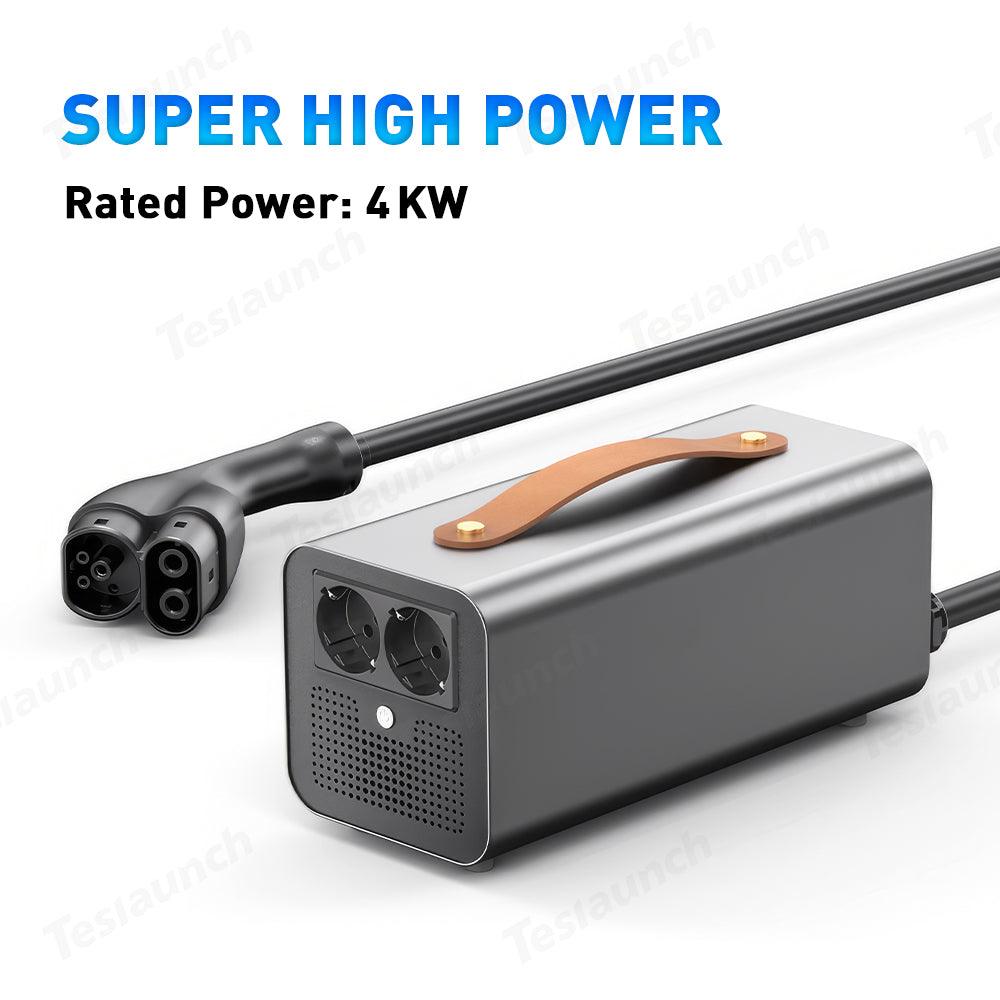
Conecta el adaptador Tesla V2L en el puerto de carga y conecta tus dispositivos: soporta hasta 4kW de potencia AC.
¿Es dañino el Tesla V2L para la batería?
No. El BMS de Tesla gestiona la descarga de manera segura. Solo evita descargar por debajo del 20%.
¿Cuánto tiempo puede proporcionar energía Tesla V2L?
Dependiendo de la carga, una batería de 75kWh puede alimentar lo esencial del hogar durante 8–10 horas.
¿Puede Tesla V2L alimentar una casa o un sitio de camping?
Sí: puede hacer funcionar refrigeradores, enrutadores Wi-Fi, cafeteras, proyectores y más.
¿Qué es Tesla V2L y cómo funciona?
El sistema Tesla V2L permite que la energía almacenada en la batería del vehículo se exporte a dispositivos externos o equipos domésticos. Transforma el EV en un generador portátil con energía limpia y silenciosa.
Conversión de Batería a Inversor
La batería de iones de litio de alta densidad de Tesla almacena energía DC, que el inversor a bordo convierte en AC (120V o 240V). Este proceso es controlado por software que asegura un funcionamiento seguro y eficiente.
Gestión Inteligente de Energía
El sistema V2L ajusta automáticamente la salida de voltaje y corriente según las cargas conectadas. Incluye monitoreo en tiempo real, protección contra sobrecalentamiento y balanceo de corriente para un rendimiento consistente.
Configuración del Adaptador Tesla V2L — Cómo Usarlo Correctamente
- Conecta el adaptador Tesla V2L al puerto de carga del vehículo.
- Conecta tu dispositivo o herramienta en la salida del adaptador.
- Monitorea la salida a través de la aplicación de Tesla.
- Evita exceder la carga total de 11.5kW.
Modelos Tesla 2025 que Soportan V2L
El lanzamiento de V2L de Tesla comienza con vehículos listos para hardware equipados con inversores avanzados.
Cybertruck — Integración Completa de V2L
El Cybertruck cuenta con tomas de corriente AC instaladas de fábrica y una salida máxima de hasta 11.5kW, suficiente para alimentar una pequeña casa o múltiples herramientas de alta potencia.
Model Y Juniper (2025+)
El renovado Model Y Juniper soporta funcionalidad V2L limitada a través de actualizaciones de firmware y adaptadores compatibles. Perfecto para camping o uso de emergencia.
Model 3
Se espera que obtenga capacidad V2L parcial en mercados selectos, pendiente de certificación para cumplimiento de seguridad de carga bidireccional.
¿Cuánto Tiempo Puede Alimentar Dispositivos Tesla V2L?
Aquí hay un desglose práctico para una batería de 75kWh (estándar en Model Y):
| Escenario de Uso | Carga Estimada | Tiempo de Funcionamiento (Aproximado) |
|---|---|---|
| Esenciales del hogar (refrigerador, luces, Wi-Fi) | 1kW | 40–50 horas |
| Configuración de camping (iluminación, cocina, laptop) | 1.5kW | 25–30 horas |
| Herramientas de obra (taladros, sierras) | 3kW | 12–15 horas |
| Carga total del hogar | 5kW | 8–10 horas |
Tesla V2L para Camping, Emergencias y Sitios de Trabajo
El verdadero valor de Tesla V2L radica en su flexibilidad. Exploremos cómo se desempeña en situaciones del mundo real.

Configuración de Camping Tesla V2L — Alimenta Tu Vida al Aire Libre
Lleva tu Model Y o Cybertruck de camping y deja los generadores atrás.
- Alimenta cocinas de inducción, luces, proyectores o unidades de aire acondicionado portátiles.
- Recarga drones, bicicletas eléctricas y cámaras con energía silenciosa y sin emisiones.
Energía de Respaldo de Emergencia — Tesla V2L Durante Apagones
Cuando ocurren apagones, la energía de emergencia Tesla V2L asegura que los servicios esenciales continúen funcionando.
- Mantén Wi-Fi y refrigeración.
- Carga teléfonos y laptops.
- Soporta pequeños dispositivos médicos.
Construcción y Sitios de Trabajo Remotos
En un sitio de trabajo, la energía de construcción Tesla V2L reemplaza a los ruidosos generadores.
- Alimenta taladros, sierras, compresores y laptops.
- Ideal para oficinas móviles y proyectos remotos.
Tesla V2L vs Otras Marcas — ¿Cómo Se Compara?
Muchos fabricantes de EV ofrecen V2L, pero el enfoque de Tesla enfatiza la inteligencia del software y la escalabilidad.
| Marca | Potencia Máxima | Método de Salida | Control Inteligente | Notas |
|---|---|---|---|---|
| Tesla (2025) | 11.5kW | Adaptador o integrado (Cybertruck) | Control de software OTA | Mayor flexibilidad |
| BYD Seal | 6.6kW | Toma de corriente integrada | Salida fija | Confiable pero estático |
| Ford F-150 Lightning | 9.6kW | Puertos de energía traseros | Sistema doméstico integrado | Excelente para América del Norte |
| Hyundai Ioniq 5 | 3.6kW | Enchufe integrado | Plug-and-play | Poder inferior, fácil acceso |
Tesla lidera en adaptabilidad e integración con el ecosistema de carga bidireccional.
Impacto de la Batería Tesla V2L — ¿Es Dañino?
Muchos propietarios preguntan: "¿Tesla V2L daña la batería?"
La respuesta: No hay daño significativo si se usa correctamente.
El Sistema de Gestión de Batería (BMS) de Tesla regula la descarga y el control térmico para prevenir el estrés excesivo de la batería.
Mejores prácticas para la longevidad:
- Evita la descarga completa (mantén la carga por encima del 20%).
- Usa cargas moderadas cuando sea posible.
- Permite descanso entre largas sesiones de descarga.
Las baterías modernas de Tesla están diseñadas para manejar descargas parciales miles de veces con una pérdida de capacidad negligible.
Tesla V2L vs Powerwall & V2G — ¿Cuál es Mejor para Uso en el Hogar?

Mientras que V2L alimenta dispositivos directamente, Powerwall y V2G (Vehicle-to-Grid) cumplen roles diferentes en el ecosistema de Tesla.
| Característica | Tesla V2L | Tesla Powerwall | Tesla V2G |
|---|---|---|---|
| Tipo | Descarga portátil | Almacenamiento fijo en el hogar | Sistema interactivo con la red |
| Capacidad | Hasta 11.5kW | 13.5kWh por unidad | Dependiente de la red |
| Caso de Uso | Exterior y respaldo | Almacenamiento de energía en el hogar | Alimentar energía a la red |
| Movilidad | Alta | Ninguna | Ninguna |
| Integración | Basado en adaptador | Solar + inversor | Requiere aprobación de políticas |
En resumen:
- Usa V2L para movilidad y emergencias.
- Usa Powerwall para gestión de energía en el hogar 24/7.
- Usa V2G para participación en la red cuando esté disponible.
Futuro de la Carga Bidireccional: ¿Qué Sigue para Tesla?
En 2025, Tesla está expandiendo su ecosistema de carga bidireccional para hacer que el uso de energía sea más dinámico y controlado por el usuario.
Los desarrollos próximos incluyen:
- Integración de la Aplicación de Energía de Tesla — monitoreo de energía en vivo y programación.
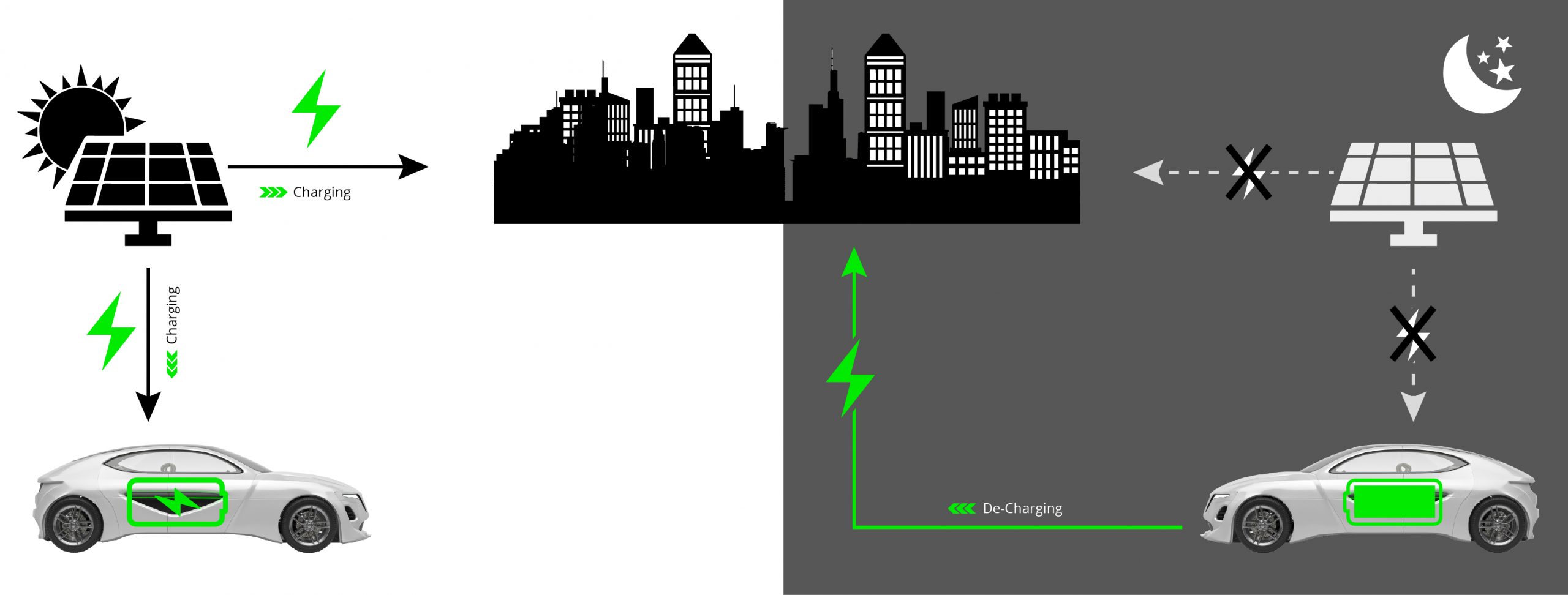
- Conmutación Automática entre el suministro del automóvil y el del hogar (V2H).
- Sinergia Cybertruck–Powerwall, permitiendo respaldo total del hogar sin energía de la red.
A medida que las regulaciones globales evolucionan, espera que Tesla V2L y V2G se fusionen en una plataforma sin fisuras que conecte hogares, automóviles y redes de energía renovable.
Conclusión — Por Qué Tesla V2L Importa en 2025
Tesla V2L no es solo una característica de conveniencia: es la base de la independencia energética.
Al fusionar la movilidad del vehículo con la salida de electricidad de calidad doméstica, Tesla permite a los propietarios:
- Alimentar la vida diaria incluso cuando la red falla.
- Acampar, viajar y trabajar en cualquier lugar.
- Participar en la transición del mundo hacia una energía limpia y distribuida.
A medida que se lanza la línea de 2025, Tesla V2L transformará la forma en que las personas piensan sobre los vehículos eléctricos: no como automóviles, sino como ecosistemas de energía completos sobre ruedas.